Jimmy Iovine’s latest warning landed with the force of someone who’s been right before.
What he’s really diagnosing is this: streaming services are “minutes away from being obsolete,” not because the technology is failing but because the fundamental relationship is broken.
Artists want to communicate with fans. Platforms won’t let them. That friction, according to the man who built Beats and helped launch Apple Music, makes the entire model unsustainable.
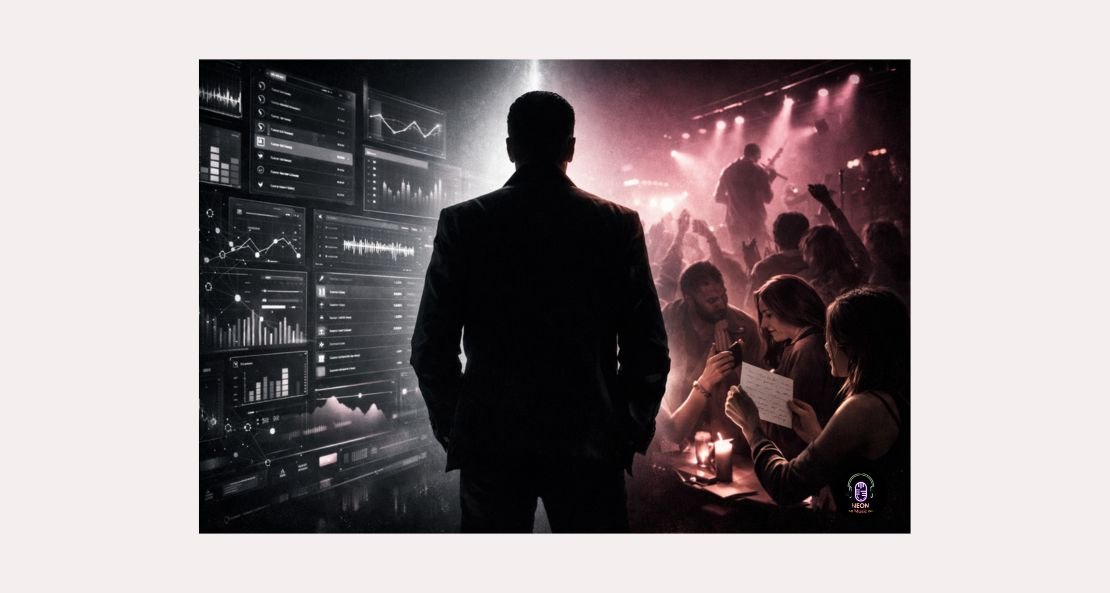
Streaming scaled access to music, but it stripped artists of proximity to the people who actually sustain their careers.
Streaming didn’t fail because listeners stopped listening. It failed because artists stopped owning the relationship.
The timing matters. Iovine delivered this diagnosis whilst the industry was busy congratulating itself on subscriber growth and revenue increases.
What he saw instead was structural pressure disguised as success. Spotify now reaches roughly 713 million monthly active users and about 281 million paying subscribers globally, illustrating unprecedented scale even as artist economics remain contested.
Yet the artists supplying that catalogue still struggle to reach their own audiences directly. In Iovine’s framework, that imbalance isn’t just inconvenient. It’s unstable.
Evidence supporting his claim has been accumulating quietly. A 2025 industry report found that 92% of superfans want deeper connection with artists, whilst 85% said personalised communication would strengthen that bond.
Streaming platforms deliver metrics: stream counts, follower totals, algorithmic reach.
They don’t deliver relationships. No emails. No direct contact. No ownership of the audience.
Streaming platforms behave like utilities, but artists expect them to behave like communities.
This absence has consequences. Artists like James Blake have spoken publicly about playing to millions of listeners without knowing how to reach them directly to announce a show.
Ticketing platforms, streaming services, and social networks each hold fragments of fan data. None of them hand it over. The artist remains dependent on intermediaries who control access to their own audience.
A growing segment of independent and mid-tier touring artists has started experimenting with alternatives.
Reports from late 2025 point toward direct-to-fan strategies: musicians selling music, merch, and experiences through their own sites before ever touching streaming platforms.
The model treats Spotify and Apple Music as discovery engines rather than destinations.
Artists collect emails, build relationships, monetise superfans first, then release to streaming services for reach.
This is the kind of early behavioural signal we track inside Neon Signals, our weekly briefing that spots momentum shifts before playlists, charts, or press cycles catch up.
Platforms like EVEN, TopFans, Bandcamp, and Openstage are emerging around this shift, offering daily payouts, fan-data ownership, and direct communication channels.
These aren’t fringe experiments. They’re early signals of infrastructure rebuilding itself around fan relationships rather than passive listening.
The music industry has a history of recognising structural shifts only after they’ve hardened into reality. Iovine watched labels respond to Napster with lawsuits instead of adaptation. Two decades later, the same pattern is resurfacing around AI.
Iovine’s warning was blunt: licensing catalogues to AI companies without building proprietary platforms risks feeding a system that eventually replaces the industry’s leverage.
Ownership of enterprise value matters more than a percentage of revenue.
Major labels have pursued AI licensing deals whilst promising protection for artists, yet transparency remains thin. How much are companies paying? Are payments recurring or one-off?
How will revenue split between publishing and recordings? What royalty rates reach artists? Few public answers exist.

The industry isn’t collapsing. It’s fragmenting into parallel systems that no longer share the same incentives.
Artist consent has become a flashpoint. Independent organisations have negotiated opt-in structures for AI training.
Major labels have largely avoided similar commitments, arguing that catalogue ownership grants licensing authority.
Creator groups disagree, warning that repeating the streaming model could leave songwriters receiving only a fraction of new revenue streams.
What these deals signal is urgency disguised as strategy. Faced with disruption, labels appear to prioritise licensing revenue over building platforms they control. Iovine’s criticism reflects pattern recognition.
He built Beats because he understood the industry rarely moves laterally. It drills the same hole until it stops producing.
The argument isn’t that streaming disappears. It’s that streaming stops being the centre of gravity.
The question isn’t whether streaming survives. It will. The question is whether artists continue tolerating a system that treats them as content suppliers rather than creative partners.
Direct-to-fan infrastructure already exists. Behaviour is shifting. Platforms built around autonomy and genuine connection are gaining momentum whilst traditional streaming models struggle to evolve beyond scale.
What Neon Music sees here is a pattern, similar to the cultural reset explored in Pop Culture Broke Its Own Rules: How 2026 Became the Year Everything Changed, whenever power shifts in music the people holding it last rarely recognise the change in time.
They optimise for the previous game whilst a new one is already being played. Iovine’s value isn’t prediction. It’s recognising when the ground has already moved.
Streaming is still growing. Revenue is still increasing. But artist behaviour is changing, independence infrastructure exists, and platforms that refuse to adapt are losing leverage.
The next dominant music platform won’t feel like a streaming service at all. It will feel like a relationship engine disguised as media.
His philosophy about empathy as the foundation of marketing connects this cultural diagnosis to his business instincts.
Marketing, in his view, isn’t persuasion. It’s understanding who you’re communicating with and building work that reflects that understanding.
The product becomes the message. If the work is strong enough, marketing happens naturally. It’s the same philosophy that shapes Neon Music’s editorial approach to industry change.
Obsolescence may not arrive all at once, but the early signs are already visible. The only question is how long it takes everyone else to notice.
Subscribe to Neon Music for more industry analysis and cultural diagnostics that cut through the noise.
Recommended reads:
- How Independent Artists Make Money in 2025: Direct-to-Fan Guide
- Streaming Payouts 2025: Which Platform Pays Artists the Most?
- Livestream Culture: How Hip-Hop Conquered Twitch & Kick
- How Much Do Artists Make on Spotify in 2025? (Clear Answers, Current Sources)
- The 2024 Music Industry Trends Guide: What’s Really Changing and Why You Should Care